6 Sep 2026
Analyzing Shifts in Player Demographics Within Nevada's Online Casino Market
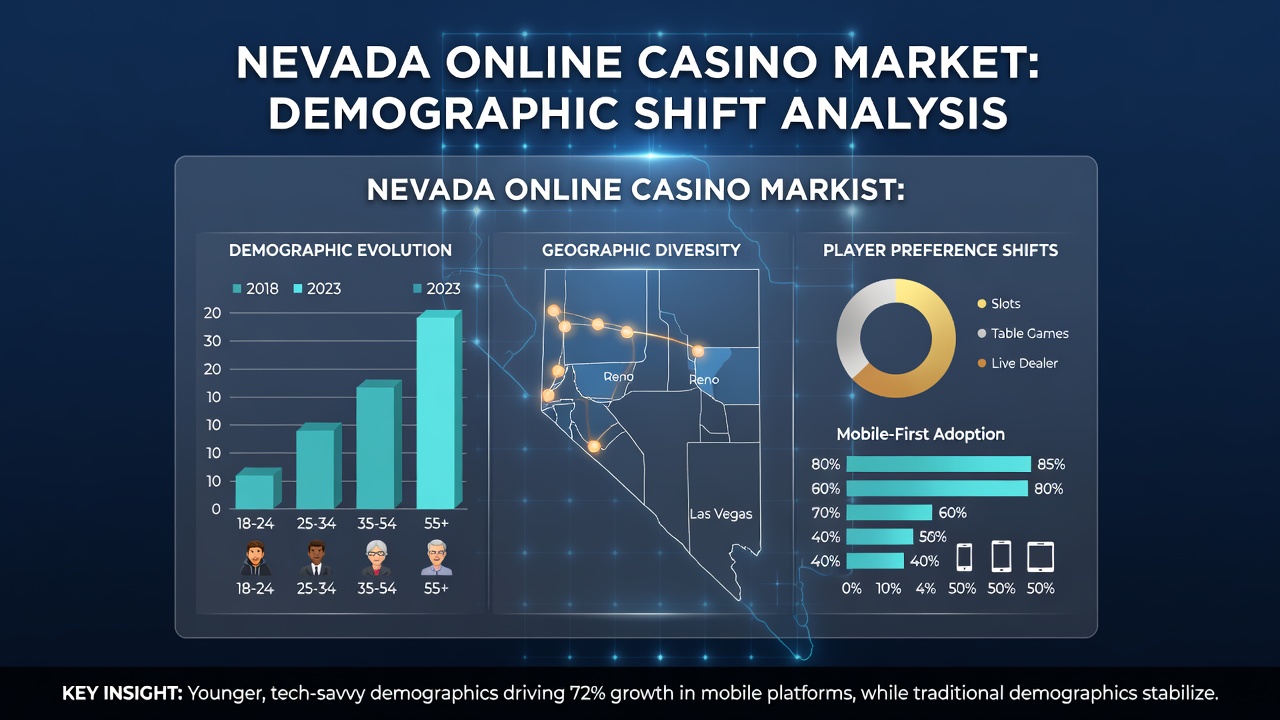
Nevada's online casino sector has tracked measurable changes in player demographics since the state's legalization framework took shape, and data released through September 2026 continues to map those movements across age brackets, geographic origins, and participation patterns. State regulatory filings show that the proportion of players aged 25 to 34 rose from earlier baselines, while the share of participants over 55 declined in relative terms even as absolute numbers held steady in several reporting periods. Analysts at the Nevada Gaming Control Board have compiled monthly revenue and user logs that reveal these adjustments, and industry reports tie the shifts to broader access through mobile platforms and revised marketing channels that reach newer cohorts without displacing established ones.
Historical Context of Demographic Tracking
Early online casino operations in Nevada drew primarily from in-state residents already familiar with traditional casino floors, yet participation logs from the first five years documented a gradual widening of the player base that included out-of-state visitors once interstate compacts expanded. Researchers who examined initial licensing data noted that male players formed teh majority in every recorded quarter, while female participation grew steadily as promotional offers and game variety increased. Those patterns set the stage for later accelerations, and by the mid-2020s the arrival of new game formats coincided with measurable upticks in younger adult engagement across both desktop and app interfaces.
Recent Trends Observed Through September 2026
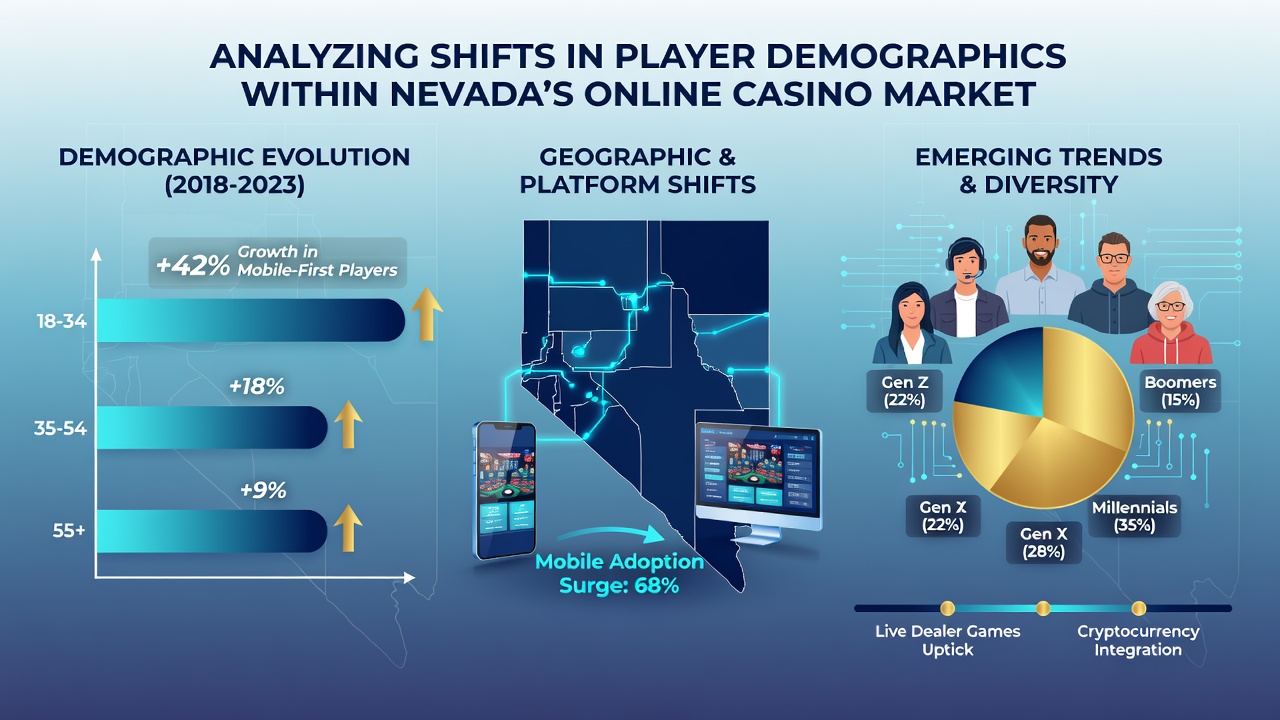
Figures compiled for the period ending September 2026 indicate that the 18-to-24 age segment increased its share of active accounts by several percentage points compared with 2023 baselines, a movement attributed in part to expanded digital advertising and esports-adjacent content integrations. At the same time, the 45-to-54 cohort maintained consistent session lengths, and data from the same regulatory releases show that players located outside Clark County now represent a larger fraction of total activity than in prior years. Observers note that these geographic spreads align with improved broadband availability in rural Nevada counties and neighboring states that permit account linkages under existing agreements. Gender distributions have also shifted incrementally, with female account registrations climbing in line with the introduction of live-dealer formats and social features that studies from university research centers have linked to higher retention across mixed demographics.
Key Factors Influencing Demographic Movements
Regulatory adjustments implemented between 2024 and 2026 opened additional pathways for multi-state play, and those changes appear in the data as an uptick in cross-border participation that broadened the overall age range without concentrating activity in any single group. Mobile device penetration statistics from industry associations further correlate with the rise in shorter, more frequent sessions among younger users, whereas older cohorts continue to favor extended desktop sessions during evening hours. Economic indicators tracked by state agencies show that disposable income levels among the 25-to-34 segment recovered faster post-pandemic in urban centers, providing one measurable driver behind increased deposit volumes from that bracket. Meanwhile, marketing expenditures reported by operators have tilted toward targeted social media campaigns that reach audiences previously underrepresented in casino advertising logs, and those efforts coincide with the documented rise in new account creations among both urban and suburban populations.
Comparative Data from Regulatory and Academic Sources
Reports issued by the American Gaming Association place Nevada's online market within a national context where similar age redistributions have occurred in other regulated jurisdictions, and the association's quarterly summaries highlight parallel growth in the 25-to-34 segment across multiple states. Academic papers from institutions such as the University of Nevada, Las Vegas have examined session frequency and game preference correlations that align with the demographic movements captured in state filings, noting that skill-based and live-streamed offerings attract a wider spread of participants than traditional slot-only libraries once did. International comparisons drawn from Australian regulatory bodies indicate that Nevada's patterns mirror those seen in markets with comparable mobile-first rollouts, where younger adults adopted online platforms at higher initial rates before older groups followed at steadier paces. These cross-referenced datasets provide a consistent picture of gradual rather than abrupt transitions, and they underscore the role of infrastructure improvements in enabling broader access across income and location categories.
Implications for Market Structure and Future Monitoring
Operators have adjusted product offerings and payment options in response to the documented demographic realignments, and filings through September 2026 show increased investment in responsible gaming tools tailored to the needs of newer participant groups. State oversight continues to aggregate anonymized user metrics that allow ongoing comparison of participation rates by age, gender, and region, and those metrics feed into annual policy reviews that evaluate whether current frameworks accommodate the observed shifts. Research institutions maintain longitudinal studies that track retention curves across cohorts, and preliminary findings suggest that the expanded geographic reach has stabilized overall user volumes even as individual segment shares fluctuate. The data released to date therefore supplies a foundation for continued analysis without projecting outcomes, and regulatory bodies have committed to publishing updated demographic summaries at regular intervals to support transparent tracking of these ongoing movements.
Conclusion
Nevada's online casino market has recorded clear demographic adjustments through the data available as of September 2026, with changes concentrated in age distribution, geographic participation, and gender balance that reflect regulatory, technological, and marketing developments. Regulatory compilations, industry association summaries, and academic examinations together document these patterns in factual terms, and the continued release of comparable metrics will allow future assessments to build directly on the established baselines. The observed shifts remain measurable through established reporting channels, providing stakeholders with concrete figures for evaluating market evolution within the state's defined legal structure.