20 Sep 2026
Mapping Historical Milestones That Shaped Nevada's Virtual Casino Framework
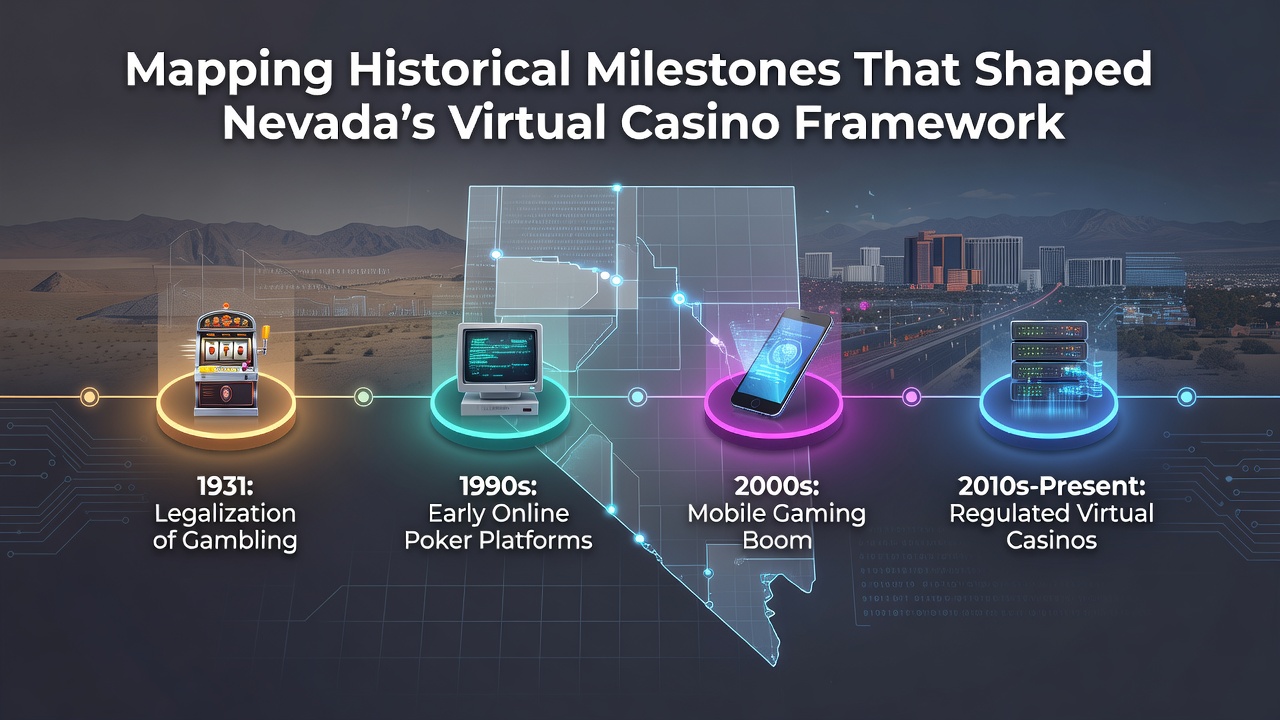
Nevada established the foundation for its casino industry back in 1931 when state legislators legalized gambling through the Assembly Bill 98, and that early move created the regulatory structure that later expanded into virtual formats, while the Nevada Gaming Control Board began overseeing licensing and operations from its formation in 1959.
By the mid-1990s internet technology introduced new possibilities, and operators started exploring online platforms, yet federal restrictions such as the Wire Act of 1961 limited interstate activity, so Nevada focused on building internal frameworks that could adapt once technology advanced further.
Early Digital Experiments and State Legislation
In 2001 Nevada lawmakers passed Assembly Bill 466, which authorized the state to develop regulations for internet gaming within its borders, and this legislation directed the Gaming Control Board to create technical standards for software, security protocols, and player verification systems that would support future virtual casino operations. Observers note that this step positioned Nevada ahead of most other states because it addressed both technological requirements and consumer protections in one package.
The Unlawful Internet Gambling Enforcement Act of 2006 created additional federal hurdles, yet Nevada continued refining its own rules by requiring any licensed operator to maintain physical servers inside the state and to submit regular compliance audits, while researchers at institutions such as the University of Nevada, Las Vegas documented how these measures helped maintain control over virtual transactions even as national debates continued.
Legalization of Online Poker and Interstate Agreements
Online poker received explicit approval in 2013 when the Nevada Gaming Commission issued the first licenses for real-money intrastate play, and three operators launched platforms that year under strict geofencing requirements, while data from the Nevada Gaming Control Board shows initial player registration numbers exceeded early projections and generated measurable tax revenue within the first twelve months.
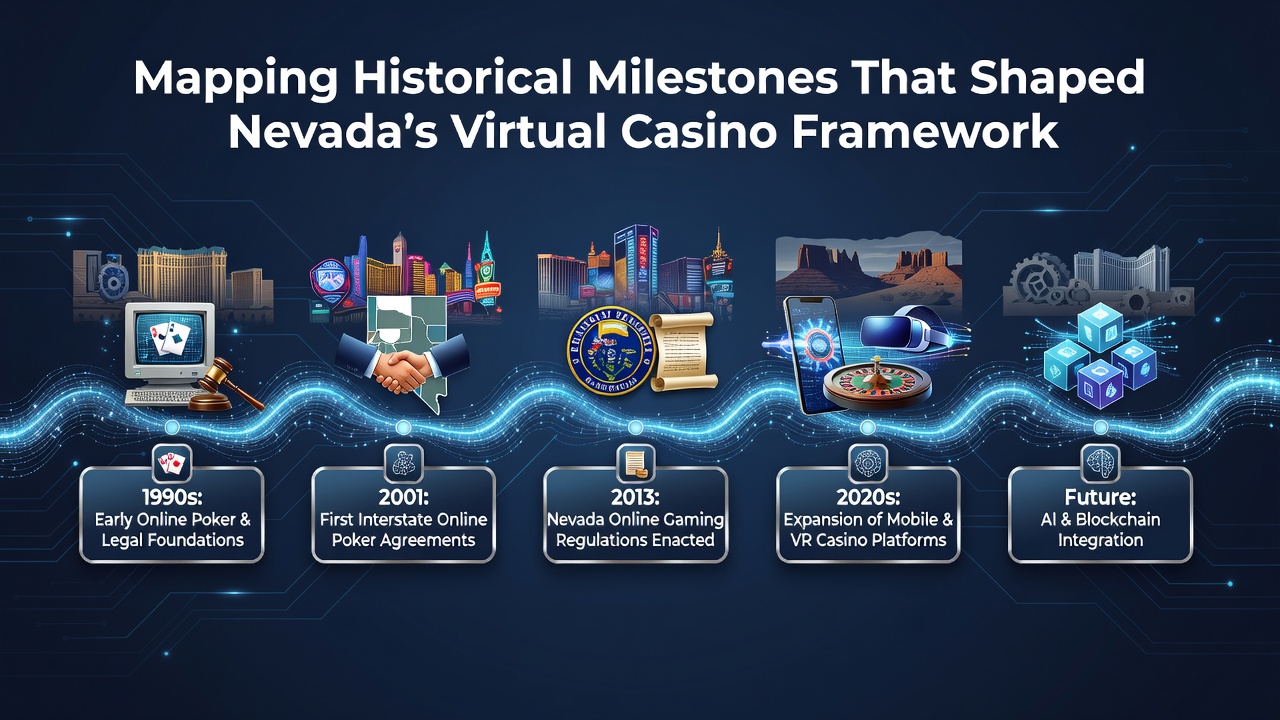
Those early platforms demonstrated that Nevada's existing brick-and-mortar licensing model could transfer to virtual environments, and the state later entered an interstate compact with Delaware and New Jersey that allowed shared poker liquidity across the three jurisdictions starting in 2015, which expanded player pools without relaxing Nevada's core regulatory standards.
Expansion into Mobile and Broader Virtual Offerings
Mobile gaming received formal authorization in 2015 after the Gaming Control Board updated its technical standards to cover smartphone and tablet applications, and licensed operators began offering slot-style games alongside poker, whereas the 2018 repeal of the Professional and Amateur Sports Protection Act opened additional pathways for sports betting apps that integrated with the existing virtual casino infrastructure.
By 2021 regulators had approved full online casino products including slots, table games, and live dealer options for players located inside Nevada borders, and annual reports indicate steady growth in licensed virtual offerings through 2025, while September 2026 marks the scheduled implementation of updated geolocation and responsible gaming protocols that build directly on the milestones established over the previous two decades.
Conclusion
The sequence of legislative actions, regulatory updates, and technological adaptations has produced a cohesive virtual casino framework in Nevada that continues to evolve from its 1931 origins, and those who track the industry observe that each milestone reinforced the state's emphasis on controlled expansion within defined geographic limits. Data collected by state agencies shows consistent revenue streams and compliance rates that reflect the cumulative effect of these historical steps.